Posted in Encouragement/Motivation, Food Stuff, intermittent-fasting

Lettuce Entertain You!

Salads are a great addition for the journey to a healthier lifestyle. They are versatile and varied and nutritious if you choose the right ingredients and practice portion control.  The heart of every good salad is based on the greens you choose.    

Most people conjure up visions of salads where the Iceberg Lettuce is the base.   Iceberg lettuce has gotten a bit of a bad reputation with claims that it has no nutritional value and I, like countless others, bought into this rumor.      

An amazing sale on bagged “garden salad” caught my eye.   I noted the star of the show was Iceberg lettuce and it just burned me that they (whoever “they” are) were offering discounts on food that would do nothing for me.   It prompted me to do a bit of research, and I was surprised to find that I had been misled!   Iceberg lettuce is reasonable and nutritious!    

Nutritionally, it provides essential vitamins such as Vitamin A, Vitamin K, and Vitamin C, contributing to eye health, blood clotting, and immune function. 

Iceberg lettuce also contains beneficial minerals like potassium and calcium, which support heart health and strong bones.     

I’ll stop hating on Iceberg lettuce, for sure.   

There are some other greens to add to your mix.  I like to mix and match to keep my body guessing at what I’m going to throw at it next.  

  1. Raw Spinach  –  a great way to boost up your iron  
  1. Raw Beet Greens –  vitamin A  and vitamin K 
  1. Raw Swiss Chard  –  tvitamin A and vitamin C 
  1. Raw Dandilion Greens – high in calcium, iron, and prebiotic fiber & vitamin C  
  1. Raw Mustard Greens  – a bit of Folate, vitamin C and vitamin K 
  1. Raw Collard Greens  – Vitamin K, Vitamin C, and a small amount of E 
  1. Raw WaterCress – Vitamin K and Vitamin C 
  1. Raw Romaine – Vitamin K and Vitamin A 
  1. Raw Leaf Lettuce – Vitamin A 

As you’ll note, there are two vitamins that seem to be present in nearly all forms of the lettuce family.  Vitamin A & K 

Why you need Vitamin A –   

Vitamin A is essential in your Vision health, aids in Immune Function & Reproductive health, assists in Cell growth and development and is a workhorse for your skin health. 

Why you need Vitamin K –  

Vitamin K is important to contribute to blood clotting and is a major star when it comes to your bone health.   

You cannot choose a “wrong” combination of the lettuce family.  However, do not live on salad alone.  This is only a supplement to healthy journey you’ve chosen.  Continue to make wise decisions and eat mindfully!  

Posted in Emotional Well-Being, intermittent-fasting

I am my own Enemy

Does Fasting Work?   That’s the one question I am asked frequently.  My answer… its the ONLY thing that has worked for me.   I have tried many variations of fad diets, portion control and calorie counting, and it all ended with me being frustrated.  Honestly, even the Intermittent Fasting brought me to the point of frustration, and I had to sit down and have a hard look at things. 

All my life I have identified as the “fat girl”, the “chubby woman”, the girl with love handles and jiggly thighs.   That’s who I know and that is who society knows.  I am accustomed to a certain way of deference from others… subtle judging glances as I fill my grocery cart,  not so subtle stares as I chuff by in my shorts that insist on riding up the inside of my thighs forcing me to do the awkward pull and leg shake to fix the problem.  I admit, I am most likely only imagining most of this, people are very self-absorbed and have no interest in those around them while in public.   However, being out there, I have always been very aware of how large I am.    It’s like the times I’ve gone in the woman’s section to look at clothes and I just “knew” the women there were asking themselves why I thought I was going to find anything at all that would fit me in that section.  I was up here in the first class, and I needed to get my rotund butt back over to lower-class where the sold the clothes by square foot.   

I dropped 80lbs.  People were smiling more at me.   I was getting appreciative looks and direct eye-contact.    My cart had fresh veggies and fruits in it and not a single item of junk food or sugar.   I was still very aware of being out there, but now it felt amazing!  I was lighter and moving quicker and it was like being on a sort of natural high.    I was actually achieving a goal I had only dreamed of for decades!  

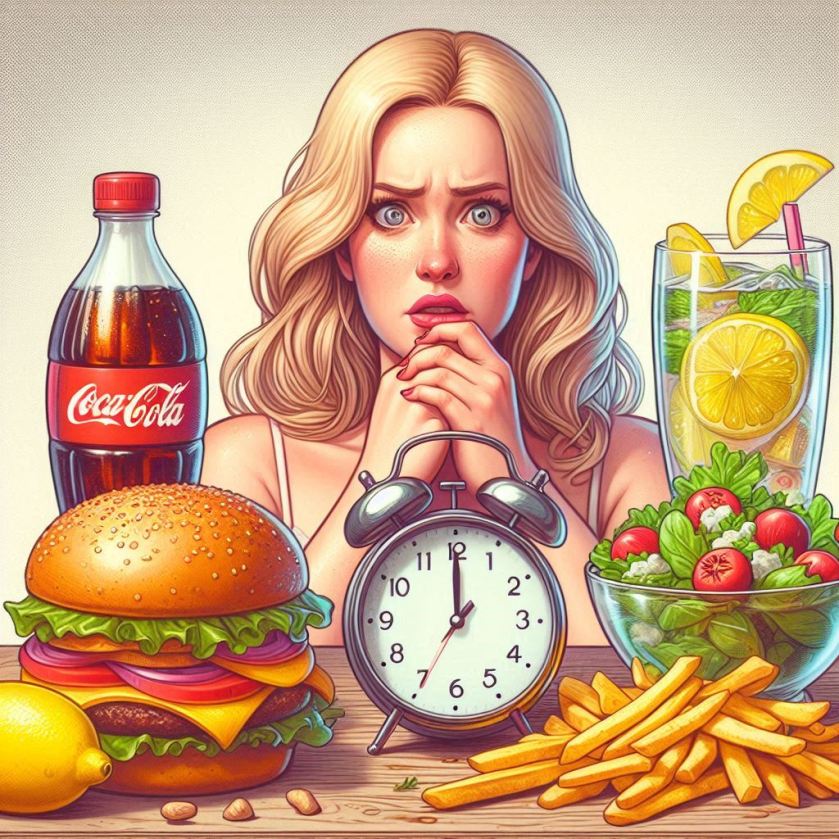
Then the self-saboteur came knocking.    She looks like me, the “old” me.   She told me things like, “Its cool to back off on the fasting a bit now, you got this” and she would look at the clock and shrug, “two scoops of ice cream at 9 pm isn’t going to kill you”.    I was oblivious to her tactics, I still felt good, although I admit my energy wasn’t quite the same.  Then I was watching more tv and finding excuses to sit down rather than get up and move around.    My weight loss stopped.   It went beyond a plateau, it came to a screeching halt, tires squealing.    I gave half-hearted attempts to return to my patterns but my “get up and go” was gone.     Jumping into the mix came a back injury, an excuse not to move much, but also a discovery that when i am in severe pain, I EAT.    

I wasn’t gaining, but I wasn’t losing.   Ten months down the road and I hurt my shoulder.  More pain and realization that things are not going my way at all.   This time I sat down and had a chat with my doctor.   It was obvious that I had lost my motivation and in our discussion we both agreed that I had sabotaged myself.    The question is WHY???   I don’t have the full answer, not yet.   I’m still working on that part.   I think part of it is that I suddenly didn’t know my part anymore.   After decades of being the “fat girl” , I wasn’ t her any longer and it threw me for a curve.    That’s something I’ll need to work on. 

In the meantime,  I am back on track with my Intermittent Fasting.   My doctor visit was the motivation I needed to get me back.   I don’t want to go back to where I was.  The only option is to pick myself up and keep moving forward.  

Leave a comment

Posted in Encouragement/Motivation, Food Stuff, intermittent-fasting

Exploring the Carnivore

A plateau is, no doubt, one of the most frustrating blockers in this journey of a better lifestyle.   I began to doubt myself and I felt old habits trying to creep back in as week after week nothing seemed to change.  The weeks turned to months and the numbers on the scale have refused to move.  I know my motivation is lacking, my hunger pangs are winning, and my self-esteem appears to dip down to those self-sabotaging moments that held me back for years.     

This must stop.  My brother reached out to me, having the same problem.  He has been plateaued for a full year.   He grew weary of it and did something about it instead of lamenting about the frustration.    He embarked on a side journey of a Carnivore diet combined with the intermittent fasting.    If anyone needs an inspiring talk, my brother is the one to speak with.  His scale is moving again, and the hopefulness has come back into his voice.   The daily text messages I get are all encouraging me to explore this method myself.   I’m going to let history repeat itself and I’m going to take his advice and dive headfirst and give it a go.   

Today is Day One.    

I spent a good portion of my morning reading up on the Carnivore diet and I have doubts, mostly because I am a lover of fruits and vegetables and this diet does not include those.  It’s an elimination diet with claims to help with weight loss, improve mental clarity, reduce inflammation, improve digestion and increase energy levels.     

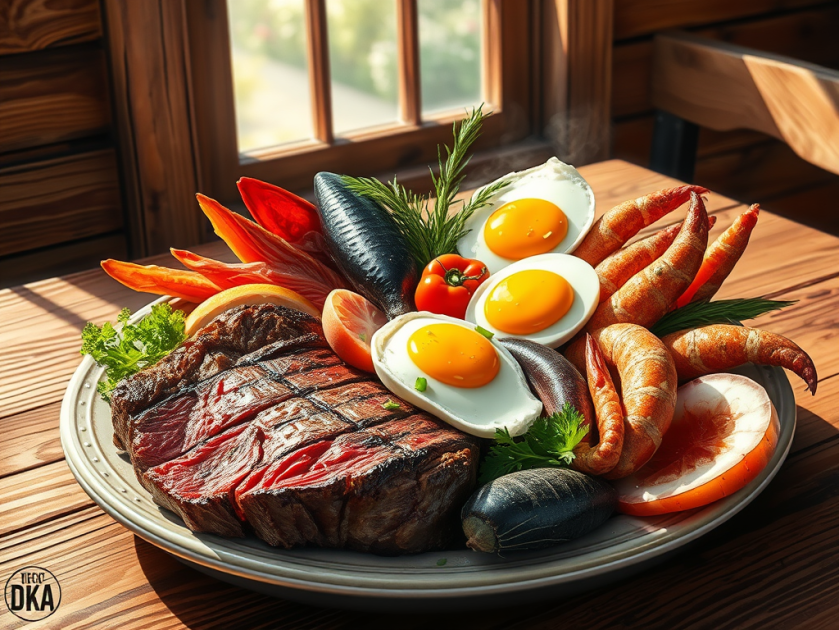
The basic foods you get to consume include animal proteins, fatty cuts of meat, organ meats, fish and seafood, eggs and full-fat dairy products.      

The foods you are avoiding include plant-based foods, grains and cereals, legumes and beans, processed foods, sugars and sweeteners, and alcohol.    

I encourage you to read up on this :  The Beginner’s Guide to the Carnivore Diet – Carnivore Keto Secrets   This site is very thorough in detail, and you’ll have a good deal of information if you decide you wish to give this a try.    

I do know that due to my love of fruits and vegetables, this is not a diet that I will stay on for a great length of time. Especially given the time of year when all the best berries are coming into season.   I will most likely alternate this along with a plant-based diet to ensure I am getting all the nutrients my body needs.   I am not the same as my brother.  Our genders alone dictate that we will lose weight differently. Our age makes a profound difference as well.  He is exploring the needs of man entering his 50’s and I am tending the needs of woman mid-50’s in the middle of menopause.   Our results will be different, but the point of this exercise is to break the plateau.    

Would you give up fruits and veggies for a month to break your plateau?  

Drop a comment below and let me know what your thoughts are!  

Leave a comment

Posted in intermittent-fasting

Prolonged Fasting – the 24 Hour Fast

Prolonged/Extended Fasting varies, but typically it will span a period of 24 hours to a week.  If you are doing the 24 hours fast, you should allow a day or two of rest between the Prolonged Fasting periods. 

During the fasting time, the body transitions from using glucose as a primary energy source to the state of ketosis, the burning of stored fats.

One of the key benefits of Prolonged Fasting is the promotion of autophagy.  This is the body’s process of removing damaged cells and generating new ones.  It is also believed to stimulate stem cell production The process is essential for maintaining cellular health and preventing diseases. The increase in cellular cleanup activities also is beneficial for anti-aging. 

Other benefits include a reduction in inflammation, improved cardiovascular health, lower risk of insulin resistance, better blood sugar control, improve cholesterol and triglycerides levels, fat loss and weight loss.

What to eat Before and After the 24-Hour Fast:

To promote the ketosis and stem cell health, you should choose nourishing, nutrient-dense whole foods.   Fatty meats, bone broth, organ meats, full-fat cheese, and low-carb vegetables.  

Doing a 24 hour Fast:

A 24 hour fast typically will begin at sundown on the first day and will end at the same time the following day.  However, you are free to choose your start time to fit your own schedule.     It is important to note that linking your fasting period with circadian rhythms will work well with the metabolic processes in your body that are governed by natural light and dark cycles.   This is the reason most will choose the Sundown start time.

Obviously, you cannot eat food, candy, etc. while on the fast, but you can have beverages.  The choices are limited to water, mineral water, seltzer water, black coffee, or tea.    NO SODA

As an Intermittent Faster, you are familiar with at the 16–18-hour mark being the time that you would “break the fast”.  This will be your rough patch, but keeping physically active and busy will help you overcome the hump.   

After restricting your calories for 12-36 hours your body begins breaking down fatty acids into energy molecules called ketones.   That’s what they are all talking about when they say “State of Ketosis”.   As you hit your 16-hour mark, your body activates a process of cellular repair called the autophagy.   Not only is autophagy taking away the damaged and old cells, but it is also removing infectious and toxic bacteria and viruses.     This is most likely the reason you are not willing to eat when you have a stomach virus, your body is forcing its only self-repair mode.

One response to “Prolonged Fasting – the 24 Hour Fast”

  1. aliyaanemily82 Avatar

    wow!! 77Getting Back on Track

    Liked by 1 person

Leave a comment

Posted in Food Stuff, intermittent-fasting

Breaking the Fast

            “Breakfast is my go-to meal, how can I do Intermittent Fasting?!”   I’ve heard this from several folks beginning their journey, and from those on the journey I’ve heard this is the one meal they’ve struggled with the most.

When you hear the word “Breakfast” you automatically envision a morning meal as this is how it has always been referred to.  The word “Breakfast” comes from an Old English word “Morgenmete” which means “Morning Meal”.  It’s not a surprise we have this ingrained in our brains this meal is to be enjoyed as each day begins.

 There is a fascinating article on Breakfast and its origins here :   The Origin of the Word Breakfast: A Brief History – Symbol Genie   I encourage you to take the time to read it!

                 Intermittent Fasting will challenge your hard-wired habit of having breakfast in the morning hours.  Many choose the 16/8 plan which is typically a fasting from 8pm to 12pm.  This means you break your fast at noon!  It’s a challenge indeed!   When it comes time to break your fast, you should follow some basic guidelines.

  1. Move into your eating window slowly.  Don’t dive into a plate a food and go crazy as if you have to make up for all those hours you just went without.   Begin with small portions, lighter foods like bone broth or fresh fruits to ease your digestive system back into eating mode.   This reduces any GI distress that comes with eating larger portion sizes after a fast.
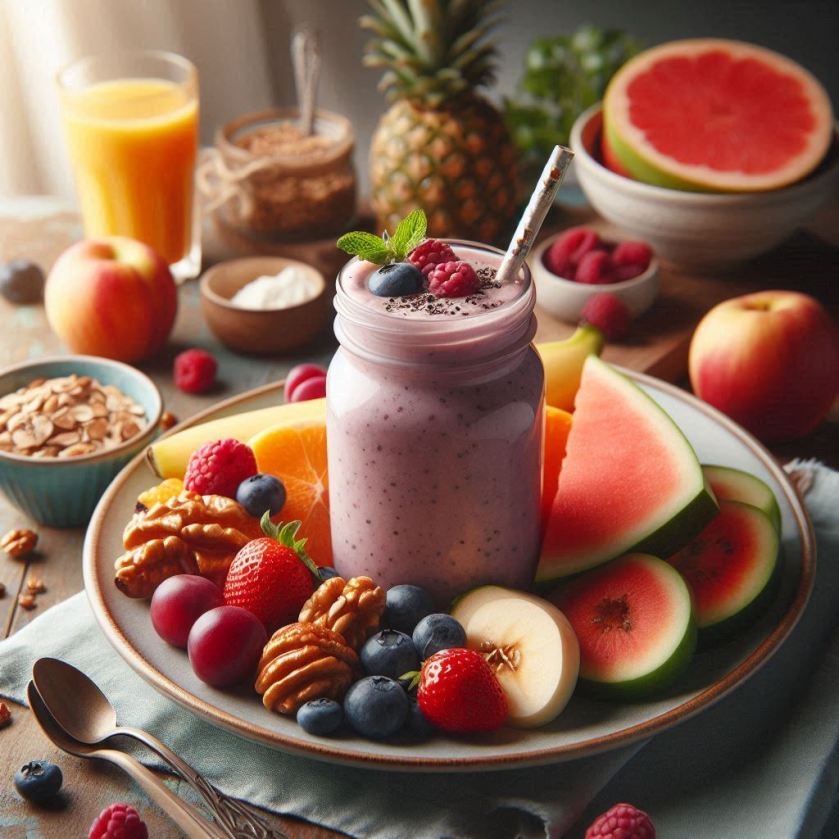
  • Start with a liquid meal such as broth or Smoothies.  There are dozens of recipes for smoothies you can make at home that are healthy and portion controlled.  Starting with a liquid meal will increase your hydration and give you nutrient-dense nourishment during your first meal. 
  • Avoid the processed and fried foods.  They can be harder to digest and can cause bloating and discomfort.  Save those, if you must have them, for a secondary meal.  That means saving bacon and sausage for another meal, so you don’t feel bad.
  • Eat mindfully.   Remember, you are not trying to make up for lost eating hours.  You are simply satisfying your current hunger.  Eat slowly.  Sit at a table without your phone or a television to distract you. 

You will find what works for you.   Don’t go out and read just one article and think that is how it is done, there are several ways to do the Intermittent Fasting!   When I break my fast, I have a green smoothie and honestly my brother described it best as tasting like lawn clippings.  It certainly isn’t for everyone!

 I have an 8 oz smoothie and 2 cups of fresh fruit, or some cheese and crackers.  If I have leftover protein for the previous night’s meal, I will have that.   I constantly change up how I eat my first meal of the day.  It may not be what is dictated in all the articles, but it is what is working for me. 

I also have chickens so fresh eggs are at my constant disposal.  Hardboiled eggs, quiche, casseroles… I have gotten inventive in how I incorporate this into my diet!   You do what you need to do and use those “how-to” articles as guidelines.  

Keep educating yourself!  The more you study the realms of the Intermittent Fasting, the more successful you will be.   

Leave a comment

Posted in Encouragement/Motivation, intermittent-fasting

The Dreaded Plateau

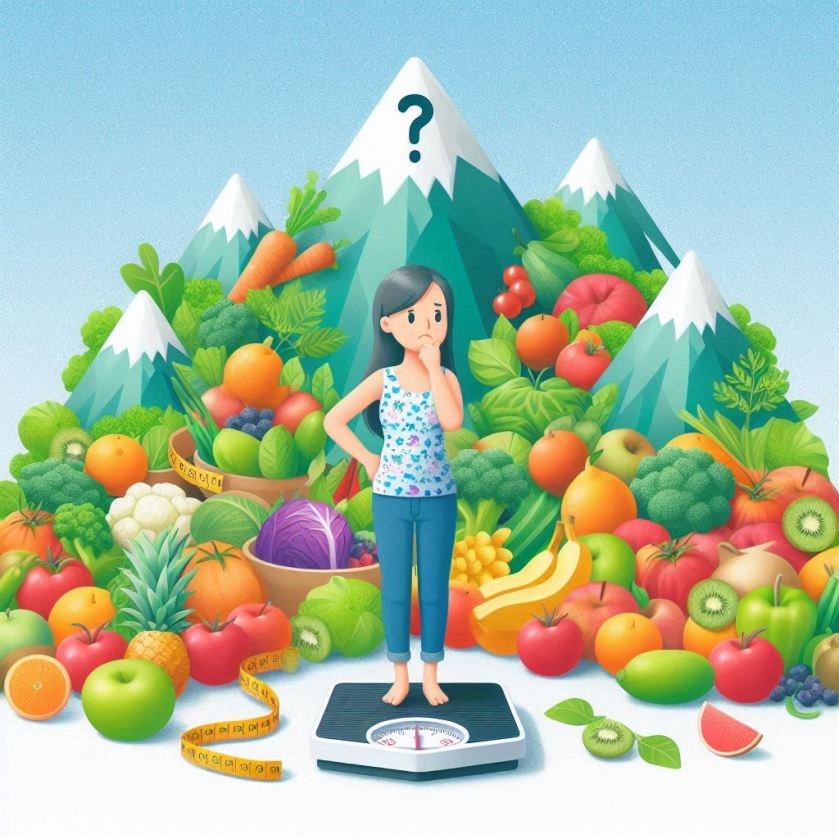
I’m doing everything the same, but the scale stopped moving! We have all been there and it will happen. It’s known as the “Plateau” and its quite frustrating!
The Plateau is not the end of your journey, it is merely a sign that you need to change things up because your body has acclimated to your new routine. There are a few things you can do to break that plateau and see those numbers start to move on the scale again.

  1. Change up your Fasting schedule.
    a. Take a pause from your regular scheduled program and skip a day or two or you can do a 24 hour fast, or change the hours in which you fast. Just do something to change it up.
  2. Alter the foods you eating
    a. Increase the fruits and vegetables
    b. Lean proteins
    c. Fish twice a week
    d. Avoid the fatty, deep fried foods
    e. Be mindful of your condiments – they have a lot of calories!
  3. Adjust your portions
    a. If you are not portion controlling – start doing it
    b. If you are already portion mindful, adjust the portions. Tighten the carbs and expand the leafy greens.
  4. Log your food
    a. Track your food intake – Visualization of what you consume is eye-opening!
    i. Include the “tiny tastes”
    ii. Include candy, cough drops, sugared drinks
  5. Be honest about your weekends
    a. Had a few drinks – those have calories
    b. Splurge on the dinner out with friends – more calories
  6. Add extra movement
    a. Park at the far end of the parking lot
    b. Take the stairs instead of the elevator
    c. Push mow instead of using the riding lawnmower
    d. Return your cart to furthest cart stall from your vehicle
    e. Go into the store instead of grocery pickup
  7. Increase exercise
    a. Go for a ten-minute walk
    b. Jump on YouTube and find a Yoga tutorial to follow along with
    c. Have a bike ride
    d. Do a few laps around the aisles at your everyday essentials store, or the home improvement store. Those places are big!
    These seven things can and will assist you in breaking that plateau. Be mindful that you will need to do this every time your body adjusts to your new routine. Our bodies are amazing at adapting to what we do! You don’t have to wait for the Plateau to show up to make changes, you can do it whenever you feel things are getting too routine and dull. Keeping things fresh and new will help your motivation stay positive.
    Best of success to you as you climb over the plateau and continue your journey!

Leave a comment

Posted in Emotional Well-Being, Food Stuff, intermittent-fasting

The Danger of Overeating

                With Intermittent Fasting, you literally go hours without any food and then are presented a small window in which you are allowed to eat.   The importance of mindful eating during this window will make a difference in your success rate if your goal is to shed a few pounds.

                Mindful eating isn’t just about choosing healthier options, it is also about portion control and discipline.    Its tempting to start eating as much as you can in the “eating window” knowing another long stretch of fasting is ahead of you.   This is not the time for indulgence. 

Choosing to Indulge, this is what you can expect : 

Low-Energy

                Sluggish and tired after a meal?  It could be your body telling you that you had a bit too much to eat.   Overeating makes your body work harder and redirects blood flow away from other organs and concentrates on the digestive system.   This makes you feel more tired and sluggish.  Foods we tend to overeat are generally higher in carbohydrates which ca cause a sugar rush inevitably followed by the dreaded sugar crash.

Heartburn

                Your stomach has this potent formula to break down food called “hydrochloric acid”.  When you over eat, this acid can back up into the esophagus, giving you heartburn.  Overeating high fat foods such as pizza or cheeseburgers can make you more susceptible to this condition.

Bloating

                Getting a bloated stomach after eating too much is not unusual.  Your stomach can only hold so much.  Repeatedly eating too much will stretch your stomach allowing you to consume more, however that is a slippery slope since that means consuming more calories as well.  Eating too fast can cause bloating, as well as food intolerance.   Slow down!

Gas

                Copious amounts of calories can cause digestives issues, including gas.  Lower intestinal gas can be caused by certain foods, or not being able to fully digest some foods.  

Nausea

                Your stomach does expand to make room for more food which in turn puts pressure on nearby organs.  This can cause discomfort, heartburn, bloating, gas and the generally feeling of wanting to throw up. 

None of these sound like a good time, do they?  We have all experienced them because we have all been there overeating and consuming the calories.  Those days are behind us now.    The longer you do the Intermittent Fasting, the more you’ll find yourself easily pushing away the plate.   Your mindful eating will become a habit and if you do overeat, the experience is painful. It will remind you how far you’ve come and encourage you to be much more mindful going forward. 

Leave a comment

Posted in Encouragement/Motivation, intermittent-fasting

Why I’m doing the Intermittent Fast

                 I didn’t begin my journey with Intermittent Fasting on a whim.   I had heard about it years ago and brushed it off as an impossibility for myself.   Go without food for hours at a time? The very thought was daunting! 

                Fast Forward to the year coming out of the pandemic.   Many of us emerged a little heavier than when we went in.  Mercifully, I had maintained my svelte 300 lbs. of course it wavered between 290 and 300 but let’s call it what it is, shall we?   I looked no better, I looked no worse, but I certainly felt worse.   Lugging around that much weight can be very tiresome.    Imagine my skepticism when I started hearing about the drug for diabetes and how it was helping people lose weight.  Then they introduced a Semaglutide targeted for people who were obese and had health conditions such as high blood pressure and dangers of being diabetic.  Bonus!  I fit those categories!  My doctor didn’t even hesitate when I asked if I could give it a try, just typed up the prescription on his tablet and voila!  

                 Apparently, I wasn’t the only one reading the news.   There was, and possibly still is, a huge shortage for the first dose of the shot.   I waited a year and never did get it.   My prescription is still sitting in my cart as “pending” for my pharmacy last time I checked.   

After that initial first few months I started listening to my brother and how he was having success with his Intermittent Fasting.   I chose to try portion control and walking 10,000 steps a day.   He lost 2-3 pounds a week, I lost track of the number of times I felt disappointment when the scale wouldn’t move for me.    My brother encouraged me to try his method, rather than wait on a “miracle drug” that might only work for a short time, after all, there had been reports that many had plateaued while using it.   He said, “Why are you waiting, just forget the drugs and try this. If it doesn’t work, then you can do your own thing.” 

I must admit, he was convincing.  He was giving me an out if I needed it and all he was asking is that I give the fasting a fair shot.    That was last September.   

I began my journey with hesitance at 295 lbs.

It is now July; I am still on the journey, and it has become more of a habit now.   When I weighed in this morning, I was at 223.4 lbs.  

71.6 lbs. in ten months.  

                 Originally my goal weight was 175 lbs., however after doing some research, I may drop that down to 165 lbs. as that is more ideal for my height and body structure.

                 I have exactly one year to accomplish this.  At the end of that year, I intend on taking a cruise with my family.   In my head I am calling it my “Victory Celebration Cruise” to celebrate how far this journey has taken me.  

                 I know I can do this!  

Leave a comment

Posted in intermittent-fasting

Quick Guide on Intermittent Fasting

The benefits of Intermittent Fasting are numerous.  It promotes weight loss, heart health, reduces inflammation, improves brain health and memory, boosts energy levels,  helps with high blood pressure, lowers cholesterol and many other wonderful things.   

I began Intermittent Fasting because of the benefits of the weight loss.   I had tried Keto, fad diets, portion control and calorie counting.  I have a lifetime of attempts that were only minorly successful before I fell back to my old habits.  

My first step was to educate myself.   Jumping right in and starving myself for hours at a time was not an idea that was welcoming, I needed to know more.   I talked to my brother who had been practicing Intermittent Fasting for several months.  He directed me to helpful TikTok sites and YouTube Channels by saying  “Just search Intermittent Fasting”  start watching and learning.  He also recommended getting a book if I preferred the old school way of doing things.   

I followed his directions and I did get a book.    “Intermittent Fasting for Women Over 50”  written by Nancy Vassallo

 (https://www.amazon.com/dp/B0B4H2CCCJ?psc=1&ref=ppx_yo2ov_dt_b_product_details)

The basic idea is there are 3 types of Intermittent Fasting.

Time-Restricted Feeding –  you eat within a certain period of time – generally within a 4-12 hour window and then fast the remainder of the day. 

Alternate Day Fasting – you fast one day and then eat regularly the next day.  

Periodic Fasting – this one involves extended fasting periods that occur periodically.  For example, fasting twice a week or once a month.    

I had a lot of weight to lose so I chose to use the Time-Restricted Feeding method.  

One of the more popular styles of this method is referred to as the 16/8.   You fast for 16 hours and have an eating window of 8 hours.  

Popular 16/8 time windows include:

  • 7 a.m. to 3 p.m.
  • 9 a.m. to 5 p.m.
  • 12 p.m. to 8 p.m.
  • 2 p.m. to 10 p.m.

You may repeat this cycle as often as you wish, I have chosen to practice with vigor at least six days a week, giving myself one day to “splurge” a little.  

I begin my fast at 8pm.   This accomplishes two things.   First, it helps me avoid the late night snack. I am not allowed to eat after that time therefore if I feel snackish after eight, I just drink a glass of water.  Secondly, I will sleep for a good portion of the fast.   This means I will not be burning major calories or be surrounded by temptations for those hours.  

When I am awake and still in the fast, I cannot consume calories, but I can drink black coffee, sugar free tea ( no sweeteners ) and water.   I struggled with the black coffee to begin with, but now its like second nature to me.   I’m not a huge fan of plain water so I drink the flavored seltzers, making sure there are no calories in them.

When my fast is over, I still watch my portions, but I also choose healthier selections of food.  I avoid processed foods and fast foods 98% of the time.   Admittedly, I do falter sometimes.   I will have a fairly light lunch, however some prefer a heavier lunch and lighter dinner.  The preference is your own.   You must do what works for you.

Many times in the afternoon you might want a little snack which is fine, however it should be something light and small.  A cheeseburger is not a snack.    You are human, you will stumble and a cookie will find its way to you.  Its totally ok, just don’t let it become a daily habit.

This is what is recommended for the most rounded diet :  ( Good luck, we know you are fighting habits but do your best to make this more and more part of your daily intake ) 

  • Fruits: apples, bananas, berries, oranges, peaches, pears, tomatoes, etc.
  • Veggies: broccoli, Brussels sprouts, cauliflower, cucumbers, leafy greens, etc.
  • Whole grains: barley, buckwheat, quinoa, rice, oats, etc.
  • Healthy fats: olive oil and avocados
  • Protein sources: eggs, fish, legumes, meat, poultry, nuts, seeds, etc.

Try and give up soda.   Its just pure sugar and much too expensive these days!   Spend that money on some fruit and veggies instead.  

Limit the processed foods ( I know I said this ) like packaged snacks, deep-fried, sugary drinks, and most frozen meals.

Treat yourself to learning some healthy recipes.  

The biggest and best thing you can do for yourself is establish a “fasting buddy” to talk to. Someone going through the same thing you are.  You can bounce ideas off one another and reach out when you’re feeling discouraged, and encourage one another on your journey.

One last thing.   Many people tell me the reason they don’t do this is because they do not have time with their schedules.   The beauty of the Intermittent Fasting is that you can tailor it to your schedule and do what works for you.  

You can do this!  

Posted in Emotional Well-Being, intermittent-fasting

The Cons of Intermittent Fasting

When you hear about Intermittent Fasting, you’ll be presented with the benefits. The weight loss, the heart healthy and lower cholesterol to name a few. However, for many on the fence, there are some hard and fast doubts of their own success and for good reason. The fears are just another fancy way of saying “Cons” when it comes to Intermittent Fasting.

Increased Feelings of hunger – absolutely 100% true. Your brain is hardwired to eat at certain times of the day and suddenly you are switching things up. There is going to be an argument about it. I once read somewhere that when you are super hungry, drink a glass of water first. If you are still hungry after drinking the water, drink another glass. If you are still hungry then you are legit hungry and its not dehydration driving your hunger pangs. With intermittent fasting though, keep drinking the water until the fast is over, you are going to have to get into that mind set.

Heightened Irritability / worsened mood – 100% true… the first week or two. Again, you are challenging years of habits and there is going to be some feedback. Women are especially familiar with the way heightened irritability works thanks to our experiences with the monthly raging hormones. You’ll be ok, this does not last. The good news is that once you get in your groove and get over that hump, your mood starts to improve greatly.

Increased thoughts about food – this just makes sense. You are knowingly depriving yourself. Just like on a “diet” you feel like you are sacrificing so you feel like all you think about is food! This comes and goes. Some days you are in great shape, some days you are struggling. The important thing is to hold fast to your goal and wait for the fast to end.

Fatigue – only in the beginning. While your body adjusts to the new pattern, its going to want to rest. As the scale slowly starts dropping the numbers, you’ll notice there is a new spring in your step and energy to keep moving where before you just wanted to sit and scroll through social media posts wishing you had more get up and go.

Feeling out of control around food/ overeating during eating windows – this one is going to be something you will always have to consciously be aware of. When you do eat, concentrate on healthy choices, avoid the fast food and processed foods. During your eating window, prep your meals, make a game plan for when you are out around other people and their food. There will be times that you will give in, just take 1/4 of what you would have done in the past. Take a container with you to restaurants and before you take a bite, put 1/2 of the meal in your to-go container so you don’t overeat ( restaurants are very generous with portions ). And above all, keep your Fasting Buddy on speed-dial/text so you can let them know you are feeling vulnerable. A good Fasting Buddy will talk you off the ledge and help you make a smart choice, reminding you of your ultimate goal.

All of these “cons” are perfectly normal, and if you choose to venture into Intermittent Fasting, you need to understand that the cons will not magically go away. They will hang around and poke up when you least expect.

Despite all the cons, the benefits and results are simply amazing. The feeling of accomplishment, when you see the scale finally begin to move after years of going the wrong way, is enough to outweigh any fear you might have.