Posted in Emotional Well-Being, Encouragement/Motivation

Our Fighting Team

                 In your quest for a healthier you, the word “Antioxidant” is going to pop up quite frequently.   What exactly is an antioxidant you may wonder.  They are your “battle” molecules as I like to call them.  Vitamin A, Vitamin C, and Vitamin E act well as antioxidants. Their purpose is to fight off harmful free radicals which basically are the “bad” molecules that cause something called oxidative stress.   These little enemy soldiers surround us in our day-to-day life in air pollution, car exhaust, cigarette smoke, and sunlight.   They are well known for putting us at risk for premature aging because they destroy the cells and tissues that make up our bodies.  They have also been linked to health conditions such as diabetes and cancer. 

                 Thankfully, finding your battle molecules, aka Antioxidants, is not a difficult quest.  You can opt to get them via a supplement as in a pill form.   They are most often synthetic forms of vitamins that may come in massive doses of the daily recommended dose.   Researchers have found that these gigantic doses may a interfere with the body’s balancing between free radicals and antioxidants.   There has been discussion on whether this type hurts or help.

There are the Antioxidant enzymes your own body produces. These are very powerful in stabilizing free radicals, and they are reusable.  Your body can use them countless times to defend, and it can regulate the production to keep an even balance.  

Then there are the Antioxidants you will consistently read about on packages and in advertisements and countless articles about eating healthy.   Dietary antioxidant nutrients.   These come from the foods we eat.  Eating a “rainbow” of foods in all different colors gives you the most variety of the best kind of antioxidant nutrients in their most natural form.

I’m not going to tell you to stop taking vitamins.   Make sure you are watching the doses on them and check with your doctor to ensure you are taking the right ones for your body needs.    I am going to encourage you to fill your refrigerator and cabinets with battle foods.

Fruits – cranberries, red grapes, peaches, raspberries, strawberries, red currants, figs, cherries, pears, guava, oranges, apricots, mango, red grapes, cantaloupe, watermelon, papaya, and tomatoes.

Dried Fruits – The antioxidant ratio is higher in dried fruits than in fresh. Consider taking along dried pears, plums, apples, peaches, figs, dates and raisins. Be careful of sugar content; avoid dried fruits that have processed sugars added to them to make them sweeter.

Vegetables – Broccoli, spinach, carrots and potatoes are all high in antioxidants, and so are artichokes, cabbage, asparagus, avocados, beetroot, radish, lettuce, sweet potatoes, squash, pumpkin, collard greens and kale.

Spices and Herbs – Cinnamon, oregano, turmeric, cumin, parsley, basil, curry powder, mustard seed, ginger, pepper, chili powder, paprika, garlic, coriander, onion and cardamom. Herbs include sage, thyme, marjoram, tarragon, peppermint, oregano, savory, basil and dill weed

Cereals and Nuts – Corn flakes, oatmeal and granola bars, walnuts, hazelnuts, pistachio nuts, almonds, cashews, macadamia nuts  

Beverages – A good portion of our antioxidants come from beverages. Apple juice, cider, tomato juice, pomegranate juice and pink grapefruit juice, green tea, black tea and plain tea.  levels   coffee is high in antioxidants but should be consumed in moderation. Note that adding milk to coffee or tea blocks antioxidants.  Red wine and beer (since it comes from grains) provide a big dose, and the health effects of moderate alcohol consumption have been well documented.

Foods with darker and richer colors like orange, yellow, blue and red tend to be higher in antioxidants.   Remember to eat a variety of both fruits and vegetables in a myriad of colors and your palate will never become bored.

Carry on and fight the good fight!
Leave a comment

Posted in Encouragement/Motivation, Food Stuff

Practice What You Preach

My family is very supportive in my health journey as well in other areas of my life when it is necessary. This past weekend I needed a ride to the grocery store due to my vehicle not being available. (That’s another story for another time). My “rock” of a sister-in-law, *Rachel, volunteered to chauffer me. As we walked through the aisles, she joked that my cart looked much like her own would. Filled with veggies and fruits for our chickens and a small section of similar items for ourselves. We stuck to the perimeter of the store and spent the bulk of our time in produce. I could say that I was shopping to impress her how healthy I did my shopping, but the truth is, it was no different than if I were alone. It is pure instinct now to avoid those inner aisles where the temptations of sugar, high calories and processed foods lie in wait.
It is also extremely helpful that I jot down what I know I’ll need before I go. Since I am purchasing fresh fruits and vegetables, I know not to buy large quantities. These things do not have a long shelf life. Writing things down helps me keep track of what I need and keeps me from the impulse purchasing. I admit, my eyes tend to light up at the sight of fresh and colorful fruits and vegetables and in the past, I’ve overbought and ended up feeding to the poultry or compost pile. Since these items are usually a little higher priced than the preservative filled yummies on the inner aisles, keeping to your list is a bit more budget friendly.
During the week I usually peruse different recipes that look enticing. I judge how difficult they appear to create, mentally inventory my supplies and add things to the list that will help complete the recipe. Keeping that in mind, I avoid weird and exotic ingredients that cannot be used in other meals that I would ordinarily prepare. Such as black seed oil, or vanilla beans. Whenever I purchase ingredients, I tend to have leftover, so I want to be able to use that in other meals. I tend to stick to the quick prep simple meals since I’m cooking for one most days. I try at least one new dish a month so I may keep upping the ante and the variety of items I consume, thus alleviating any boredom with my eating habits.
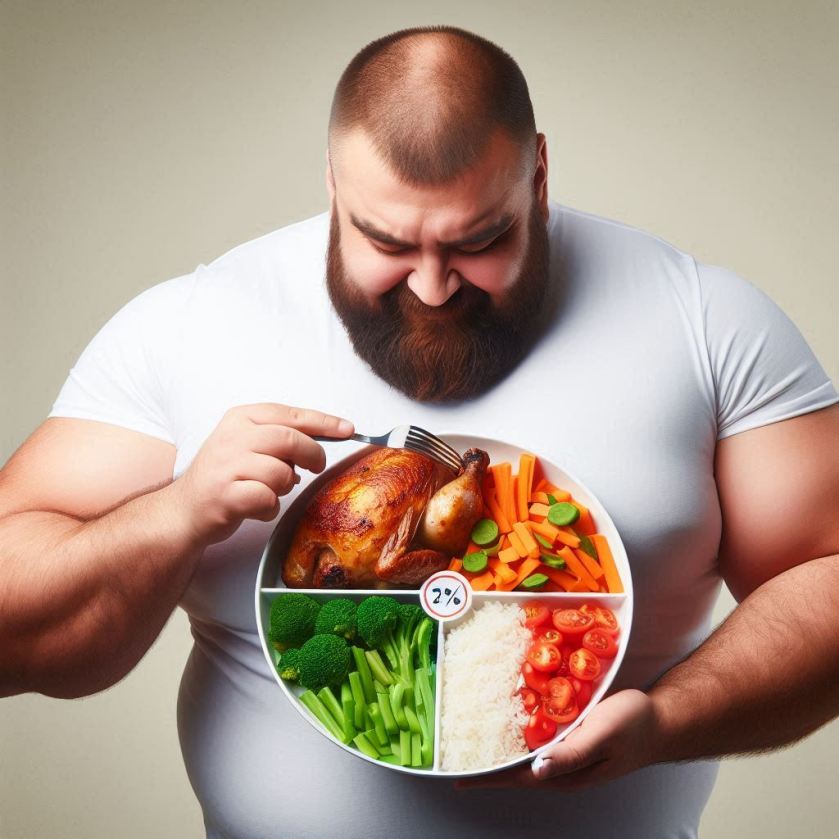
When I do sit down to eat, I always have my portion plate on hand. I have a stack of dinner plates in the cabinet that haven’t been used in forever. I know I should box them up, but I have not quite pulled the trigger on that yet. (Note to self: remove all plates bigger than dessert sized) . Having the portion plate right there keeps me focused on my portions and though there are days I do overdo it, most of the time I keep within those little portion sections. I have also found that after I serve my portions to my plate, if I put away any leftover food immediately, I will not return for seconds. If I don’t put it away, my chances of a return multiply.
Things to be mindful of on your journey to a healthier new you…

  1. Be honest with yourself
  2. Do your research
  3. Practice what you preach
  4. Don’t say one thing and then do another
  5. Don’t expect others to do what you wouldn’t do

We all stray from the course for our given reasons. It’s because we are human, and we have human feelings and responses to the world around us. Its important to acknowledge that you stray and make a point of getting right back on the journey. A little stray does not mean you are lost, it just means you are having an off day. Make a mantra in your head, “I will lead by example, practice what I preach.”

You have the power to overcome the obstacles, brush off the dirt, laugh atyour stumble and vow to do better

*names have been changed

Leave a comment

Posted in Encouragement/Motivation, Food Stuff

Control of the Portions

For the past 2 years I’ve been adamantly working on my perception of how much food is on my plate and how hungry I really am.   I was raised in a “Clean your plate” home and this has been a troublesome journey to say the least.   I learned quickly that my plates were too big and so I thought I wasn’t putting enough food on them.   I loved the plates, but the fact is I couldn’t make myself take smaller portions because it seemed like there was too much “white” space on my plate.  

I did some research and then made some changes in my life. Here are a few of the things I discovered:

Use smaller dinnerware – dessert plates will work but if you want a little more assistance, these portion control plates on Amazon.com work great!  Portion Control

Don’t eat directly from the package – it is far too easy to lose track of how much you have eaten.  Instead look at the suggested serving size and take the time to measure it out and then put that package away. 

Use a Food Diary – there are literally dozens of apps and websites available that offer the ability to log your food intake.  MyFitnessPal.com is a popular one amidst my circle of friends.   Logging your daily intake of food gives you a visual of how much you are truly eating, and it helps you stop the “oh just one won’t hurt” kind of mentality.

Understand your serving sizes – a serving size is what is listed on the package label; a portion is what you put on your plate.   Serving sizes vary from product to product and they have grown larger in the past few decades.

Use a portion size guide –   there are many out there.  You can use the hand method where your portions are compared to how much you hold in your hand; or use one that compares the portions to different objects.   I prefer the object method for myself.  I’ve printed one guide out  WebMD Portion Size Guide and pinned it to my kitchen cabinet so its easy to see as I’m preparing my meals.

Careful with the Carbs!  –  your plate should only be ¼ carbs.  Whole grains are good for your heart, but those yams, potatoes and corn are high in starch and not so friendly to the fat burning process. You can still have them, but you need to be careful on the portion. 

Go heavy on your fruits and veggies – These are going to be the bulk of your plate.  Try to avoid the canned variety and stick with fresh if possible.  There are many guides on the internet that can help you determine the portion sizes of fresh produce.

Avoid processed foods – do your best.  Fried food is not good for us no matter how yummy it tastes!  Fast food is quite expensive and portion controlling fast food is a nightmare; Avoiding the fast-food places is a good practice but if you do go, most have websites that have serving sizes and calorie counts of all their products available.

Restaurants – everyone deserves a night out, but it doesn’t have to derail your progress.   Take container with a lid with you.   Before eating, take at minimum, half of your meal and stow it away for another meal later.    It is not against the rules unless you go to a buffet.  Don’t do that at a buffet, they will charge you for that.

Meal Prep – some people like to prep for a week. Others are time constrained and prepping for a week of meals is out of the question.   When you make your evening meal, make enough to save for a meal for the following day.    Have a to-go container on your counter and as you are portioning out your plate, portion out a meal into the container as well.   Stick it in the refrigerator and in the morning, it is ready for you to grab and take to work for your mid-day meal.   No extra work involved.

Honestly, you’ll cheat somedays.  You’ll throw your hands in the air and just binge like there ‘s no tomorrow, but I promise, you won’t feel good.   You will for the moment, but your body will let you know that it doesn’t like it.   

Like Intermittent Fasting, portion control is a lifestyle change and it will take time to adjust and form the new habit.   Don’t be hard on yourself if you fall now and then.  Just get back up and keep trying. 

Leave a comment